

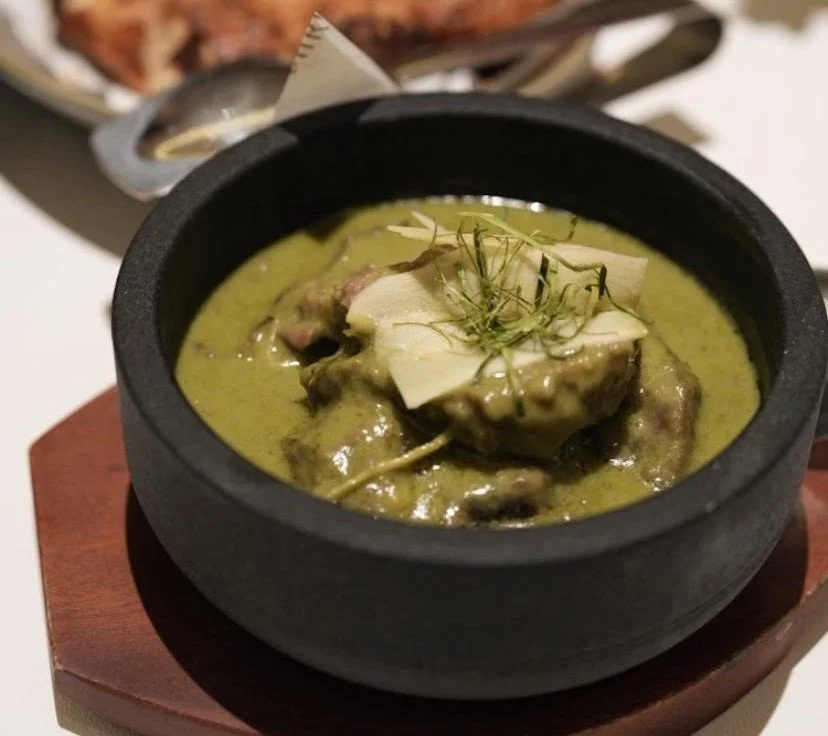
If you're deciding between Thai red curry and green curry in Singapore, you're probably wondering how different they really are.
Both are creamy, aromatic Thai curries made with coconut milk and a fragrant curry paste. Both can be spicy, savoury and packed with herbs and spices. And both are staples on Thai restaurant menus across Singapore.
So, what is the difference between Thai red curry and green curry?
The main difference comes down to their chilli base, herbs, flavour profile, colour and overall character. Thai green curry is traditionally made with fresh green chillies and tends to have a brighter, more herbal flavour. Thai red curry uses red chillies and generally has a deeper, warmer and more savoury character.
But there is much more to the story than colour.
The ingredients used in the curry paste, the protein or vegetables added to the dish and the way the curry is balanced can all influence the final result.
And if you want to explore the difference for yourself, Singapore has plenty of options, from approachable Thai restaurants such as Siam Kitchen and Bangkok Jam to the more refined Thai dining experience at Sarai Fine Thai.
What is the difference between Thai red curry and green curry?
The simplest answer is:
Thai red curry is generally made with dried red chillies, while Thai green curry traditionally uses fresh green chillies.
That difference gives each curry its distinctive colour and contributes to its flavour.
Thai green curry tends to have a fresher, more aromatic and herbal character. Thai red curry is often deeper, warmer and more rounded.
However, neither curry is simply "spicy".
Thai cuisine is built around balance. A good curry can bring together heat, sweetness, saltiness, fragrance and savoury depth rather than relying on chilli alone.
The exact flavour varies from restaurant to restaurant because every curry paste and recipe can be different.
What does Thai red curry taste like?
Thai red curry is generally rich, aromatic and savoury, with chilli warmth balanced by coconut milk and fragrant herbs.
The curry paste may contain ingredients such as red chillies, garlic, shallots, lemongrass, galangal, coriander root and other aromatics.
The coconut milk adds richness and softens the intensity of the chilli.
The result is a curry that can be spicy without being one-dimensional.
Depending on the recipe, you may also notice sweet, salty, citrusy or earthy notes.
Is Thai red curry spicy?
It can be, but the level of heat varies.
One common misconception is that the colour of the curry tells you exactly how spicy it will be.
It doesn't.
A green curry can be very spicy because fresh green chillies can bring plenty of heat. A red curry can also be mild, medium or hot depending on the amount and type of chilli used.
The balance of the curry matters just as much.
What does Thai green curry taste like?
Thai green curry is usually known for its fresh, aromatic and herbal character.
Fresh green chillies contribute both colour and heat, while herbs and aromatics add complexity.
Coconut milk gives the curry its creamy texture and rounds out the sharper flavours.
Thai basil is also commonly associated with green curry and can contribute a fragrant, slightly peppery note.
The result is often a curry that feels brighter and more aromatic than a red curry.
But again, don't assume green means mild.
Thai green curry can be seriously spicy.
Why is Thai green curry green?
The green colour primarily comes from the fresh green chillies and herbs used in the curry paste.
Unlike a curry that gets its colour primarily from a powdered spice such as turmeric, Thai green curry relies heavily on fresh ingredients.
This is part of what gives it its distinctive appearance and aromatic profile.
The curry can become lighter or darker depending on the recipe, coconut milk and ingredients used.
Why is Thai red curry red?
Thai red curry gets its colour largely from red chillies used in the curry paste.
Dried red chillies are commonly used in traditional preparations, creating a deep red colour when combined with the other ingredients.
The amount of chilli and the ratio of ingredients in the curry paste influence both the colour and flavour.
Some restaurant versions may also have a more orange appearance because of the coconut milk.
What ingredients are in Thai red curry?
Thai red curry paste can contain a combination of aromatic ingredients such as:
Dried red chillies
Garlic
Shallots
Lemongrass
Galangal
Coriander root
Kaffir lime
Shrimp paste in some traditional preparations
Other herbs and spices
The exact ingredients depend on the recipe.
Once the paste is cooked with coconut milk, the aromatics become part of a rich curry base that can be paired with meat, seafood or vegetables.
What ingredients are in Thai green curry?
Thai green curry paste commonly uses:
Fresh green chillies
Garlic
Shallots
Lemongrass
Galangal
Coriander
Kaffir lime
Thai basil or other herbs
Shrimp paste in some traditional preparations
Again, recipes vary.
The use of fresh green chillies and herbs gives green curry its distinctive fresh character.
Which is hotter: red curry or green curry?
There is no universal answer.
Green curry is often considered hotter because fresh green chillies can contribute significant heat, but the actual spice level depends on the recipe.
The number and type of chillies used, how the curry paste is prepared and how much coconut milk is added can all affect the final result.
If you're ordering Thai food in Singapore and are sensitive to chilli, don't rely on the curry's colour alone.
Ask the restaurant about the spice level.
Which Thai curry is sweeter?
Both red and green curry can have sweetness, but green curry is often associated with a slightly sweeter flavour profile.
That sweetness helps balance the heat and aromatic intensity of the curry.
Red curry can also have sweetness, particularly when coconut milk and other balancing ingredients are used.
The final flavour depends on the recipe rather than a fixed rule.
Which Thai curry is better with chicken?
Both work well with chicken.
Green curry with chicken is particularly well known and is commonly paired with Thai eggplant, basil and other vegetables.
Red curry can also work beautifully with chicken, creating a richer and warmer combination.
At Sarai Fine Thai, for example, the current menu features Green Curry with Chicken Breast, Thai Eggplant and Basil. Sarai also serves a Dry Green Curry with Wagyu Beef and White Turmeric, giving the familiar curry style a more refined interpretation.
That is a good example of why the "red vs green" question isn't only about spice.
The ingredients paired with the curry can completely change the experience.
Which Thai curry is better with beef?
Red curry can be particularly good with beef because its deeper, richer flavour profile pairs naturally with a hearty protein.
But green curry and beef can also make an excellent combination.
Sarai Fine Thai's Dry Green Curry with Wagyu Beef and White Turmeric is a good example.
The dish takes the aromatic qualities associated with green curry and pairs them with premium beef, creating something quite different from the standard chicken green curry many Singapore diners may already know.
What vegetables go well with Thai curry?
Thai curries can include a wide range of vegetables.
Depending on the curry, you might find:
Thai eggplant
Bamboo shoots
Bell peppers
Green beans
Pumpkin
Mushrooms
Onions
Thai basil
Other seasonal vegetables
Green curry is particularly associated with Thai eggplant and fresh herbs.
The vegetables aren't just there for colour.
They add texture, sweetness and freshness that help balance the richness of the coconut-based curry.
Thai red curry vs green curry: which is healthier?
Neither should automatically be labelled "healthier".
The nutritional profile depends on the ingredients, portion size and preparation.
Coconut milk contributes fat and calories to both styles, while the protein and vegetables can add valuable nutrients.
If you're trying to make a lighter choice, consider the overall meal rather than simply choosing red or green curry.
For example, pairing a curry with vegetables and a sensible portion of rice can create a more balanced meal.
What should you eat with Thai red curry?
Thai red curry is traditionally served with jasmine rice, which helps absorb the rich sauce and balance its flavours.
You can also pair it with:
Thai salads
Stir-fried vegetables
Grilled meats
Seafood
Thai appetisers
The key is balance.
A rich curry can work well alongside something fresh, crunchy or acidic.
What should you eat with Thai green curry?
Green curry is also commonly served with jasmine rice.
The fragrant rice provides a neutral base for the curry's aromatic and spicy flavours.
You can pair it with:
Thai salads
Stir-fried vegetables
Grilled chicken
Seafood
Thai appetisers
Fresh herbs
If the curry is particularly rich or spicy, a refreshing side can help reset your palate between bites.
Where can you try Thai red and green curry in Singapore?
One of the advantages of Singapore's Thai dining scene is that you can explore very different interpretations of the same cuisine.
Sarai Fine Thai: refined Thai curry
If you want to explore Thai curry in a more sophisticated setting, Sarai Fine Thai at Tanglin Mall offers a refined interpretation of Thai cuisine.
Creative Eateries describes Sarai as focusing on traditional Thai flavours with a modern, elegant presentation. Its current menu features dishes including Green Curry with Chicken Breast, Thai Eggplant and Basil, Dry Green Curry with Wagyu Beef and White Turmeric and Southern Coconut Curry with Flower Crab and Asian Pennywort.
Sarai is particularly interesting for diners who already know Thai food but want to explore how familiar flavours can be presented in a more elevated dining experience.
Siam Kitchen: approachable halal Thai dining
If you're looking for halal Thai food in Singapore, Siam Kitchen is another option within the Creative Eateries portfolio.
Creative Eateries currently describes Siam Kitchen as a halal-certified Thai restaurant offering approachable Thai dishes at accessible price points. Its menu includes familiar Thai favourites such as curries, noodles and soups.
That makes it a practical choice for family meals, casual catch-ups and diners who want familiar Thai flavours in a halal-certified setting.
Bangkok Jam: Thai classics with a contemporary spin
For a more casual, modern interpretation, Bangkok Jam brings classic Thai dishes together with contemporary touches and plant-based options.
Its current Creative Eateries content highlights dishes such as Phad Thai, Green Curry and Massaman Curry, alongside vegan and plant-based choices.
This makes Bangkok Jam particularly useful for groups where diners may have different preferences.
Red curry or green curry: which should you order?
Still stuck?
Use this quick guide.
Choose Thai red curry if you want:
A deeper, richer curry
Warm chilli flavours
A savoury and aromatic profile
Beef or hearty proteins
A classic coconut-based curry
Choose Thai green curry if you want:
A fresher, more herbal profile
Bright aromatic flavours
A curry with plenty of fragrance
Chicken, seafood or vegetables
A potentially punchier chilli experience
But there's no reason you can't try both.
In fact, comparing them side by side is one of the easiest ways to understand how Thai cuisine creates complexity from a relatively small group of core ingredients.
Frequently Asked Questions About Thai Red and Green Curry
What is the main difference between Thai red curry and green curry?
Thai red curry is traditionally made with red chillies, while Thai green curry uses fresh green chillies and herbs. Red curry tends to have a deeper, warmer flavour, while green curry is often fresher and more herbal.
Is Thai green curry hotter than red curry?
Not always. Green curry can be very spicy because of the fresh green chillies used in its paste, but the actual heat level depends on the recipe and amount of chilli used.
Is Thai red curry sweet?
Thai red curry can have a sweet element, particularly because of coconut milk and other balancing ingredients. However, it should also have savoury, aromatic and spicy flavours.
Is Thai green curry healthy?
Thai green curry can be part of a balanced meal, particularly when served with vegetables and a suitable portion of rice. However, coconut milk contributes fat and calories, so the overall portion and ingredients matter.
What meat goes best with Thai green curry?
Chicken is a classic pairing, but green curry can also work with beef, seafood and vegetables. Sarai Fine Thai, for example, serves both a chicken green curry and a Dry Green Curry with Wagyu Beef.
What is Thai red curry usually served with?
Thai red curry is commonly served with jasmine rice. The rice provides a neutral, fragrant base that works well with the rich curry sauce.
Where can I eat Thai curry in Singapore?
Creative Eateries offers several Thai dining options, including Sarai Fine Thai for refined Thai dining, Siam Kitchen for halal-certified Thai cuisine and Bangkok Jam for contemporary Thai favourites and plant-based choices.
The bottom line
So, what's the difference between Thai red curry and green curry?
Red curry is generally deeper, warmer and richer, with its colour and character coming largely from red chillies.
Green curry is typically fresher, more herbal and aromatic, with fresh green chillies giving it its distinctive colour and heat.
Neither is the "better" Thai curry.
They simply offer different experiences.
And if you're in Singapore, you don't have to stop at knowing the difference. You can taste how different Thai restaurants interpret these familiar flavours.
For a refined experience, explore the curries at Sarai Fine Thai.
For halal Thai dining, Siam Kitchen offers approachable classics.
For contemporary Thai dishes and plant-based options, Bangkok Jam is another Creative Eateries option worth exploring.
The next time someone asks whether you want red or green curry, you'll know exactly what you're choosing.
